

Monday, August 31, 2026
Each week, Making Sense with More in Common shares charts and data from our research and recent polls to help you make sense of the week ahead.
Last week, Meta agreed to a proposed settlement of up to $17.1 billion over allegations that its social media platforms harmed young users. Beyond the financial settlement, the agreement would require significant changes to how minors experience the platforms, including default daily time limits, restrictions during school hours, and faster responses to removing potentially harmful content.
In light of this development, we are resharing a study we conducted last year with more than 2,000 American parents that captures their views on online child safety.
Here’s what you need to know:
1. American parents—across all backgrounds and beliefs—are concerned about children’s online safety.
Over 9 in 10 US parents are concerned about children’s online safety—more than any other child safety issue tested.
More than half (55 percent) of parents think that tech companies and politicians are “not taking this seriously enough.”


2. Parents’ shared concern translates into broad bipartisan support for action.
Majorities of parents across party lines support laws to mandate detection and removal of explicit content of children (Democrats: 83 percent, Republicans: 83 percent), hold tech companies accountable for harmful content on their platforms (Democrats: 80 percent, Republicans: 78 percent), and ban kids under 16 from opening social media accounts without parental consent (Democrats: 76 percent, Republicans: 71 percent).
Nearly three quarters of parents (72 percent) are at least “somewhat” likely to take action on this issue, with over half willing to participate in direct advocacy efforts.
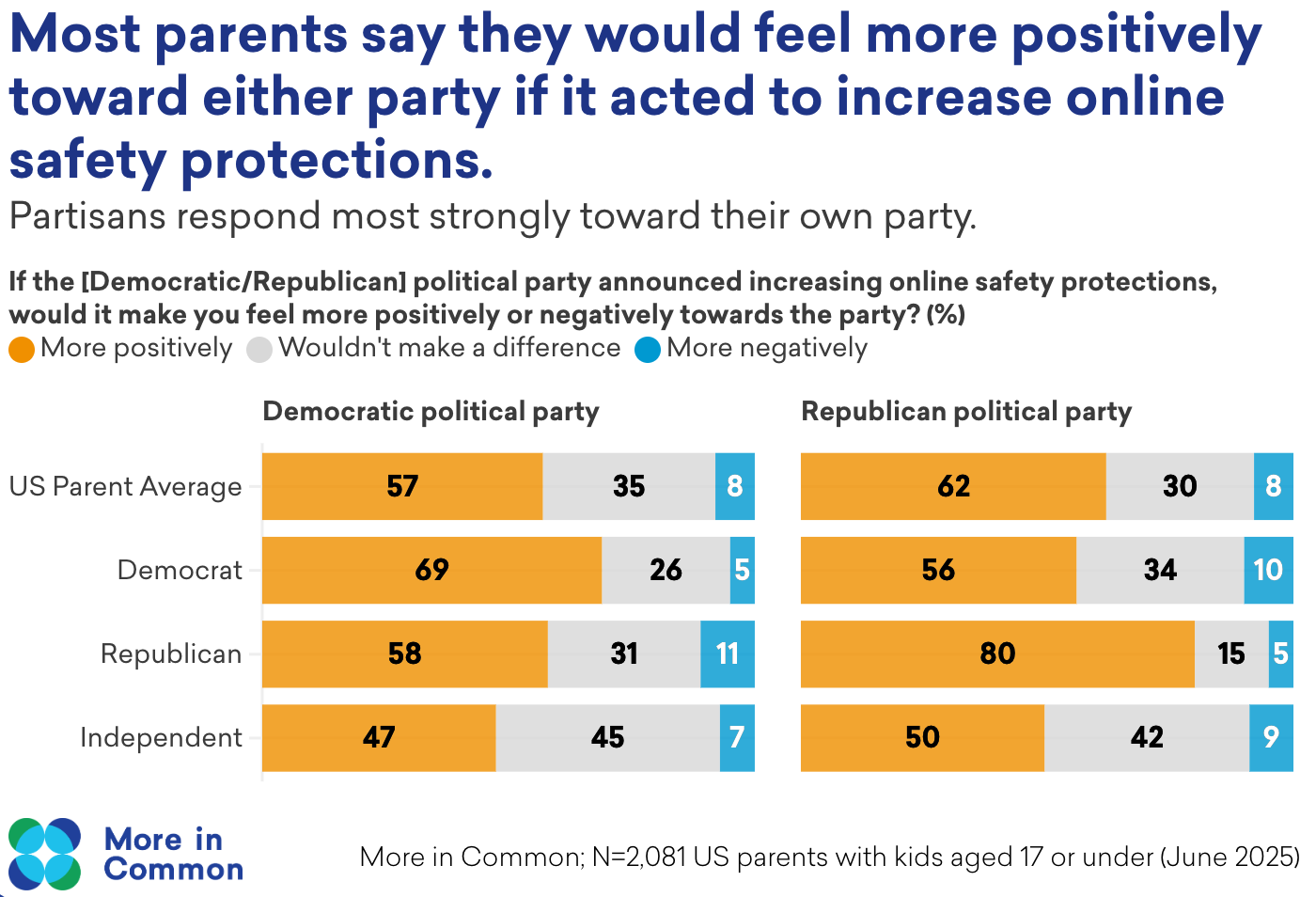
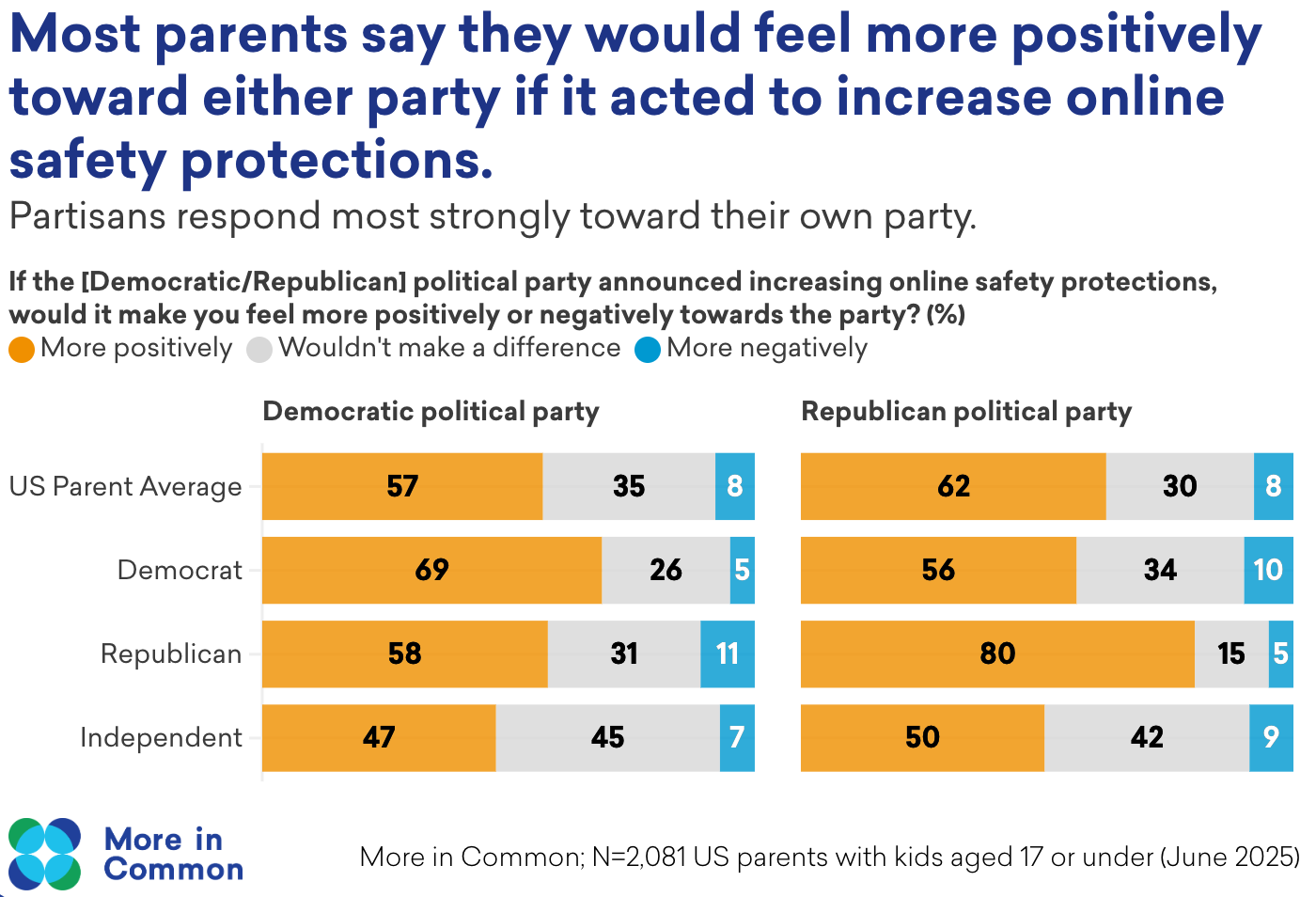
More than half of parents say they would feel “more positively” towards either major political party if they increased online safety protections (Democratic party: 57 percent; Republican party: 62 percent).
3. Parents’ support for stronger protections holds even when those protections involve trade-offs.
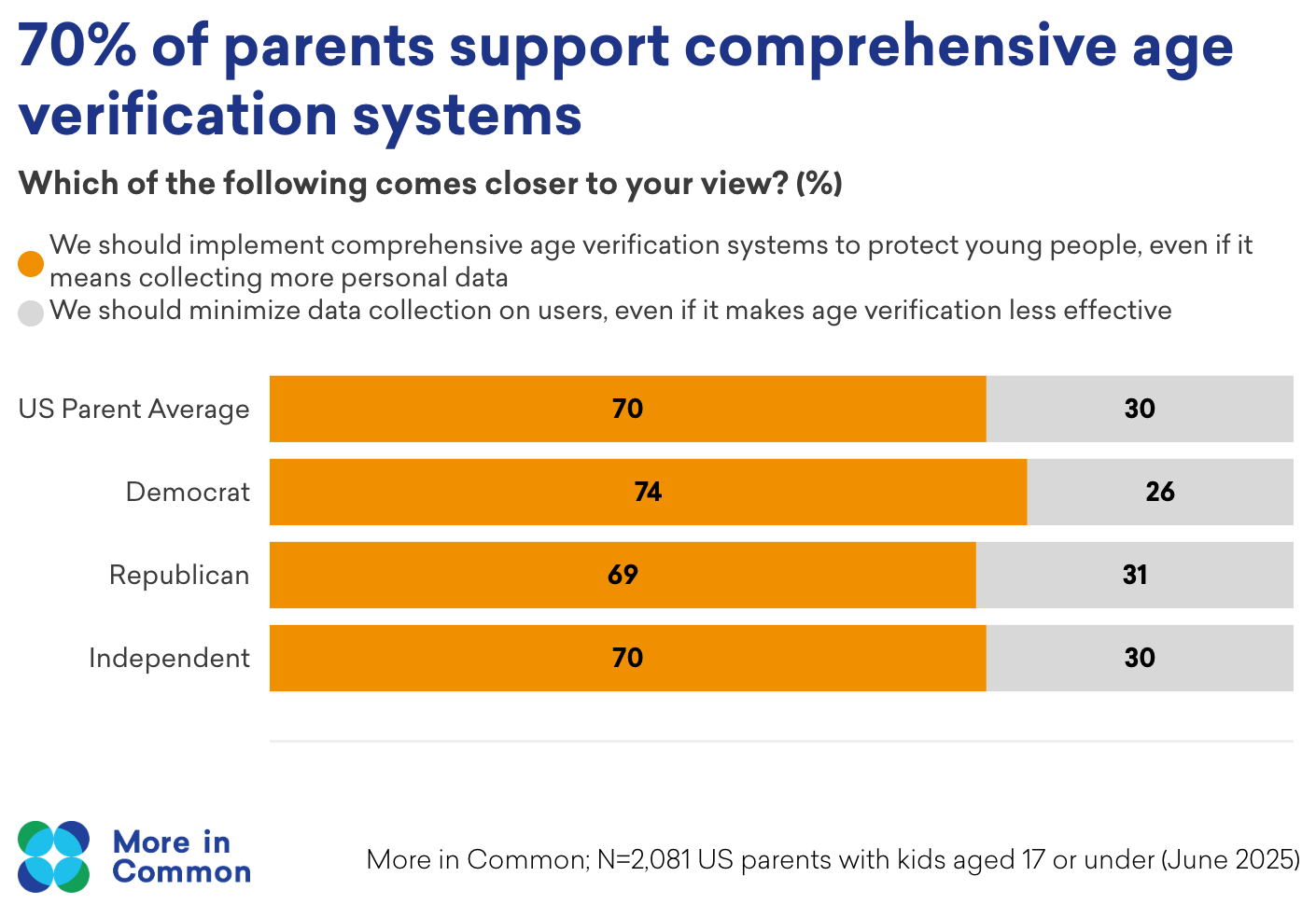
70 percent of parents support comprehensive age verification systems, even if it means collecting more personal data.
70 percent of parents agree that “protecting children online is more important than protecting free speech online.”
63 percent of parents agree that “social media platforms should use algorithms to significantly deprioritize legal but harmful content.”
The settlement is a significant test of what happens when broad public concern begins to translate into concrete changes from a major technology company.
But for Meta, and for the tech industry more broadly, the challenge is not only whether these policies reduce harm. It is also whether companies—and the public leaders who are responsible for holding them accountable— can rebuild trust with parents who remain deeply skeptical that they can implement real change.
As Nami, a mother of an infant, told us:
“We cannot expect [the] government or tech companies to care about our children, because they don’t care. They just care about their profit.”
Whether parents ultimately see Meta’s changes as meaningful will depend on whether Meta and public leaders can demonstrate that children’s well-being comes before other interests.
Want to dig deeper? Read the full report and explore our cross-country comparison of how parents in the US, UK, France, Poland, and the Netherlands are thinking about children’s online safety.
We can’t do this without you!
MIC regularly conducts research to understand the forces driving us apart, find common ground, and help bring Americans together to tackle our shared challenges. Consider supporting our work by making a donation.